
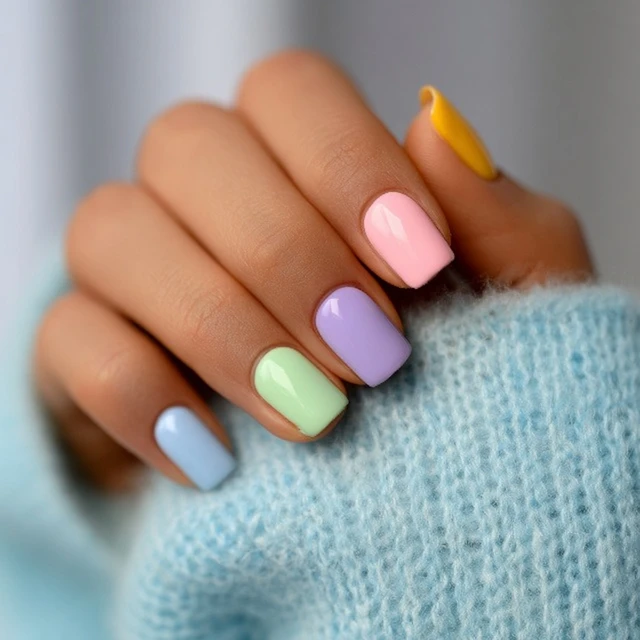
The first time I tried pastel polish on my short nails, the result was a streaky, chalky mess. The color looked nothing like the dreamy spring shades in the bottle. I learned the hard way: pastels demand patience and technique, not just a quick swipe. But once you get the method down, short spring pastel nails become a reliable, elegant choice that lifts your whole look.

Why Pastels Can Be Tricky on Short Nails
Short nails have a smaller canvas. Every flaw—uneven application, brush strokes, or a too-thick layer—shows up clearly. Pastel polishes are typically more translucent than darker shades. They need multiple thin coats to build opacity. The common mistake is rushing. I keep the ratio at three thin coats for most pastels, waiting at least 5 minutes between each. This prevents the polish from pulling or dragging when you apply the next layer.
Choosing the Right Pastel Shade
Not all pastels are created equal. Look for shades with a creamy, not chalky, finish. A soft lavender, a muted mint, or a warm peach work well. Avoid anything with a frost or shimmer finish—they amplify imperfections. I prefer creme finishes because they give a clean, modern look. Test the polish on a piece of paper first: if it looks streaky straight out of the bottle, it will be worse on your nails.
The Technique That Works
Start with a ridge-filling base coat. This creates a smooth surface, which is critical for short nails. Apply it in one thin layer and let it dry completely—about 2-3 minutes. Then, for the color, use the three-stroke method: one stroke down the center, one on each side. Keep the brush barely loaded with polish. Too much polish on the brush leads to pooling at the cuticles. After each coat, wait until the polish feels dry to the touch but still slightly soft (a matte finish). Then apply the next. For the top coat, choose a quick-dry formula. Apply it generously but evenly, and cap the free edge (the tip of the nail) to seal the color.
A Tip for Drying
Pastels are notorious for taking longer to dry. I use a quick-dry top coat and then wait 15 minutes before doing anything with my hands. Avoid hot water for at least two hours—heat softens the polish and causes smudging. If you’re in a hurry, dip your nails in ice water for 30 seconds after the top coat. This hardens the polish faster.
Common Mistakes to Avoid
- Skipping the base coat: Pastels can stain your nails, especially if they contain bright pigments. A base coat prevents this and helps the color adhere.
- Applying thick coats: Thick coats take forever to dry and are more likely to chip. Thin layers are your friend.
- Not waiting between coats: Rushing leads to smudges and uneven texture. Patience is a cheap investment for a salon-quality finish.
Final Takeaway
Short spring pastel nails are about precision, not complexity. With the right shade, thin coats, and enough drying time, you can achieve a manicure that looks clean, fresh, and intentional. It’s a small ritual that makes the season feel new.
Frequently Asked Questions
How do I prevent pastel nail polish from looking streaky?
The key is thin coats. Pastel polishes are more translucent, so apply 2-3 very thin layers instead of one thick one. Let each coat dry fully before the next. Also, use a good base coat to create a smooth surface.
What pastel colors work best for short nails?
Soft pinks, lavender, mint green, and baby blue are classic. For short nails, lighter shades can make nails appear longer. Avoid very pale or chalky shades—they can look dull. Opt for pastels with a hint of white or gray for a modern twist.
How can I make my pastel manicure last longer on short nails?
Always use a base coat and a top coat. Seal the free edge of each nail with top coat. Avoid using your nails as tools. Apply cuticle oil daily to keep the nail bed flexible and prevent chipping.